
On 26 August 2026, FoodSafety4Africa was represented at the International Agriculture and Food Fair AGRA 2026 by consortium partner ITC – Innovation Technology Cluster, contributing the project’s perspective to discussions around food safety, innovation and sustainable transformation in agrifood systems.
ITC’s participation provided an opportunity to highlight an important principle behind FS4Africa: technological and scientific solutions need to be connected with the realities of the people and food systems where they are expected to be used. This is particularly relevant to the project’s work to strengthen food safety systems in Africa, with specific attention to the informal sector. FS4Africa combines scientific, social and technological approaches and promotes the involvement of different actors across food value chains in the development of practical solutions.
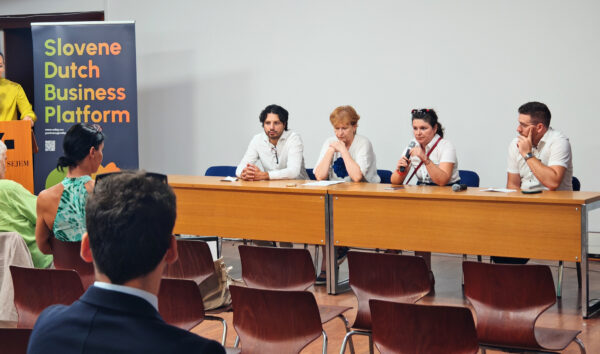
A key contribution came from Dr Saša Štraus of ITC, who participated in the panel “Women, Youth and Artificial Intelligence as Drivers of the Sustainable Transition.”
In her contribution, Dr Štraus emphasised the importance of ensuring that technology responds to genuine needs and is appropriate for the context in which it will be applied. She also highlighted the importance of involving people directly in innovation processes rather than developing solutions without sufficient connection to their users and local environments.
This perspective is closely aligned with the approach followed by FS4Africa. The project seeks to address food safety challenges through collaboration between research organisations, technology providers, policymakers, businesses and other food-system actors. Its activities place particular emphasis on stakeholder engagement and on developing approaches that can respond to the conditions of African food value chains.
ITC’s work within FS4Africa also contributes to the project’s innovation and business-support activities. As a consortium partner, ITC is involved in supporting the development of food safety solutions and strengthening connections between innovation, practical application and potential uptake.
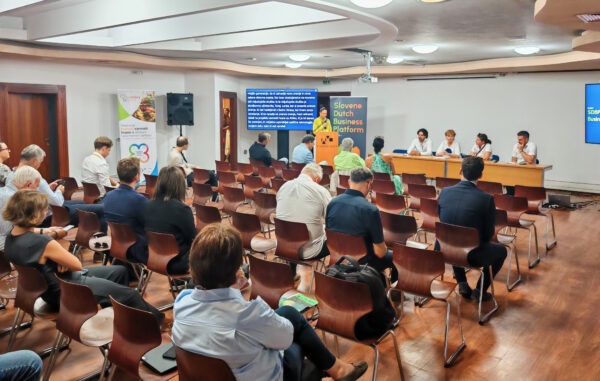 The participation at AGRA 2026 also demonstrated the value of bringing food safety into broader conversations about sustainable agrifood transformation. New technologies can create important opportunities, but their effectiveness depends on how they are integrated into existing systems and how well they respond to local priorities.
For FS4Africa, connecting technology, knowledge and people remains an important part of this process. Through collaboration with stakeholders and attention to real-world needs, the project continues working towards food safety solutions that are relevant, inclusive and suited to the contexts in which they will be implemented.
 EN
EN  FR
FR  DE
DE  NL
NL  SL
SL  EL
EL  AF
AF  AR
AR  AM
AM  SW
SW  ZU
ZU