
The FS4Africa project continues to make significant contribution to improving food safety standards within Kenya’s informal sector. Through a series of targeted training sessions and high-level engagements held in Homa Bay Central and Ndhiwa Constituencies respectively the project is empowering local actors to mitigate food risks effectively. Homa Bay was selected as target since it is one of the leading counties in Nyanza Region in Kenya with highest burden of aflatoxin contamination and food safety challenges for most food staples especially in the informal sector.
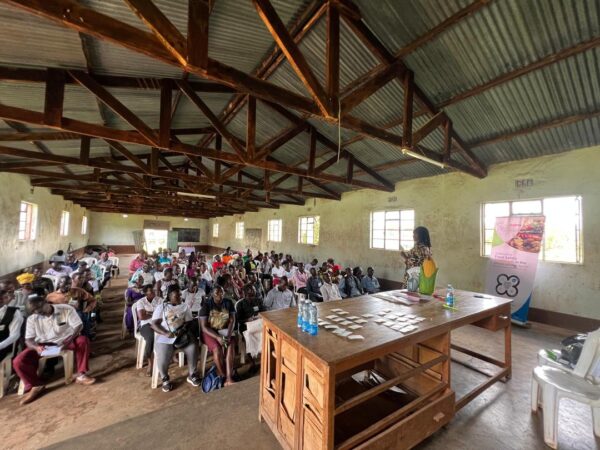
Trainings in Homa Bay County
To address the unique challenges of the informal food system, the FS4Africa team, represented by IITA and Egerton University hosted two consecutive training workshops, in collaboration with Kenya Agricultural Research and Livestock Organization (KALRO) and Homa Bay County, designed to bring technical knowledge directly to the people managing local food chains.
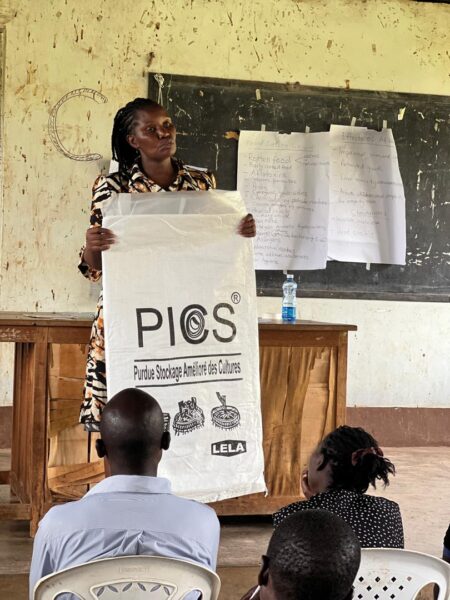
The first session was held on March 31st, 2026 in Homa Bay Central brought together more than 100 informal sector food actors. The second session was held on April 1st, 2026 in Ndhiwa and gathered over 112 participants. This diverse group of participants included farmers, transporters, traders, and processors, all of whom play a critical role in the local food supply chain. The training focused on practical ways to enhance food safety including strategies in production, handling, and transit. Some training strategies shared were the use of appropriate varieties, Aflasafe™, DryCard™ and PICS Bags ™.
To ensure sustainable practices, the participants in both sessions were provided with essential toolkits, which included:
- DryCards: Simple, reusable humidity cards for monitoring the dryness of food products to prevent toxic mold growth.
- PICS bags: Hermetic storage bags that protect properly dried crops from insect pests and mycotoxin contamination without the use of chemical pesticides.
- Educational Materials: Project fact-sheets, flyers, and jotters to facilitate continuous learning and knowledge sharing within their communities.
Strengthening research partnerships at Egerton University
Following the field activities, the FS4Africa delegation, represented by IITA and Egerton partners, visited the Egerton University campus on April 2nd, 2026.
The team had the honor of meeting the Vice-Chancellor of Egerton University, Prof Isaac Kibwage; and Deputy Vice Chancellor, in charge of Academics Research & Extension, Prof Bernard Aduda to discuss the project’s research activities including:
- Breeding for aflatoxin resistance in groundnut varieties led by Egerton University,
- Use of biocontrol solutions like Aflasafe developed by IITA and manufactured by KALRO, Trichoderma spp. under testing at Egerton,
- Capacity building of farmers and value chain actors through Living Lab initiatives in several counties in Kenya,
- Student training under FS4Africa project and impact along with the vital role of academic institutions in safeguarding public health.
The mission concluded with visits to the laboratories where FS4Africa research activities that are contributing to providing science-based solutions for food safety challenges in Africa are on-going. IITA, KALRO and Egerton discussed areas of further collaboration in research, joint student supervision and product development.
Why informal sector engagement matters
In many African regions, the informal sector is the primary source of nutrition for most of the population. By equipping middle-chain actors, such as transporters, aggregators and small-scale traders, with the right tools and knowledge, FS4Africa is building a more resilient and safer food system from the farm to fork in Africa. These efforts align with the broader FS4Africa objective to reduce foodborne illnesses and enhance the quality of African food products in both local and international markets. 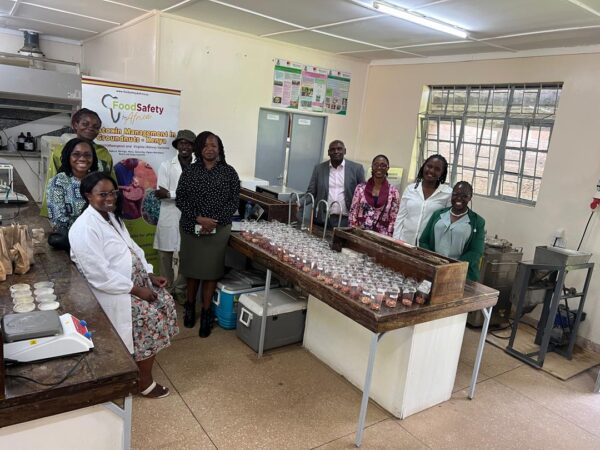
During this Informal Sector Engagement in Kenya, IITA was represented by Dr Titilayo Falade (Scientist, FS4Africa Project Coordinator), Olumodupe Banwo (Program manager, FS4Africa Project Manager), Dr Nancy Njeru (Assistant Director, Crop Heath) from KALRO, while Egerton University was represented by Prof George Owuor, Prof Paul Kimurto and Mr. Peter Akoko, FS4Africa project team members at Egerton University.

 EN
EN  FR
FR  DE
DE  NL
NL  SL
SL  EL
EL  AF
AF  AR
AR  AM
AM  SW
SW  ZU
ZU